
 By Khabar Rojana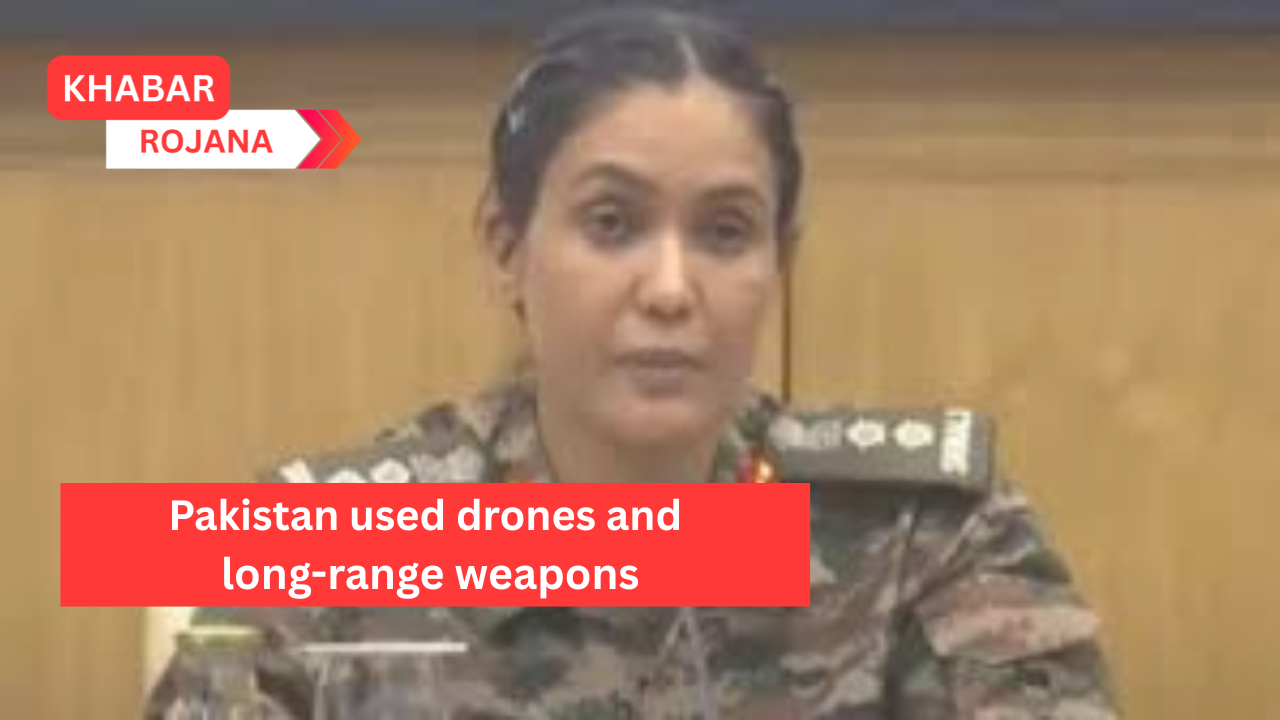
In a significant escalation of tensions, Pakistan has reportedly launched a series of coordinated attacks on India’s military infrastructure, employing drones, long-range weapons, loitering munitions, and fighter jets. The Indian government has condemned these actions, stating that over 26 locations, including airbases and military hospitals, were targeted across northern and western India. The attacks have resulted in damage to equipment and personnel, highlighting the growing threat of aerial warfare in the region.
According to Indian officials, Pakistan’s offensive spanned from Srinagar to Chhalliya, affecting critical military installations such as:
- Udhampur Air Force Base
- Pathankot Air Force Base
- Bhuj Airbase
- Bathinda Airbase
- Avantipur Army Hospital
- Udhampur Army Hospital
- Srinagar Army Hospital
These attacks have disrupted operations and raised concerns about the vulnerability of military sites to aerial threats.
In retaliation, India has activated its air defense systems, including the S-400 missile defense system, to neutralize incoming threats. The Indian Air Force has also conducted precision strikes on identified military targets, aiming to dismantle Pakistan’s offensive capabilities. Additionally, the Border Security Force reported destroying a terrorist launch pad in Sialkot following unprovoked firing from across the border.
Pakistan’s use of drones and long-range weapons has introduced a new dimension to the conflict. These unmanned aerial vehicles (UAVs) and missiles can bypass traditional air defense systems, making them effective tools for precision strikes. The deployment of loitering munitions further complicates defense strategies, as these weapons can hover over targets before striking, increasing the likelihood of successful hits.
Beyond military targets, Pakistan’s strikes have also hit civilian infrastructure, including hospitals and schools. The Avantipur and Udhampur Army Hospitals were among the facilities damaged, raising humanitarian concerns. The targeting of such institutions violates international norms and underscores the indiscriminate nature of the attacks.
| Attack Type | Pakistan’s Tactics | India’s Response |
|---|---|---|
| Drones | Surveillance and precision strikes | Deployment of S-400 missile defense system |
| Long-Range Weapons | High-speed missiles targeting airbases | Precision airstrikes on military targets |
| Loitering Munitions | Hovering weapons for delayed strikes | Countermeasures to neutralize threats |
| Fighter Jets | Airstrikes on multiple locations | Air defense operations and retaliatory strikes |
The international community has expressed concern over the escalating violence. The United States, China, Saudi Arabia, and the G7 nations have called for restraint and dialogue between India and Pakistan. Diplomatic efforts are underway to de-escalate the situation and prevent further deterioration of relations.
The use of advanced aerial technologies by Pakistan signifies a shift in military strategies in the region. Both nations are enhancing their capabilities to counter aerial threats, leading to an arms race that could destabilize the region further. The development and deployment of such technologies necessitate robust defense mechanisms and international cooperation to ensure peace and security.
Despite the ongoing hostilities, both India and Pakistan have expressed a willingness to engage in dialogue to resolve the conflict. The international community continues to advocate for diplomatic solutions and confidence-building measures to prevent a full-scale war. However, the path to peace remains fraught with challenges, requiring sustained efforts from all parties involved.
The recent escalation, marked by Pakistan’s use of drones and long-range weapons, has significantly heightened tensions between India and Pakistan. While both nations have taken defensive actions, the situation remains volatile. Continued diplomatic engagement and adherence to international norms are crucial to de-escalate the conflict and pave the way for lasting peace in the region.
 Shalu Shalu