
 By Khabar Rojana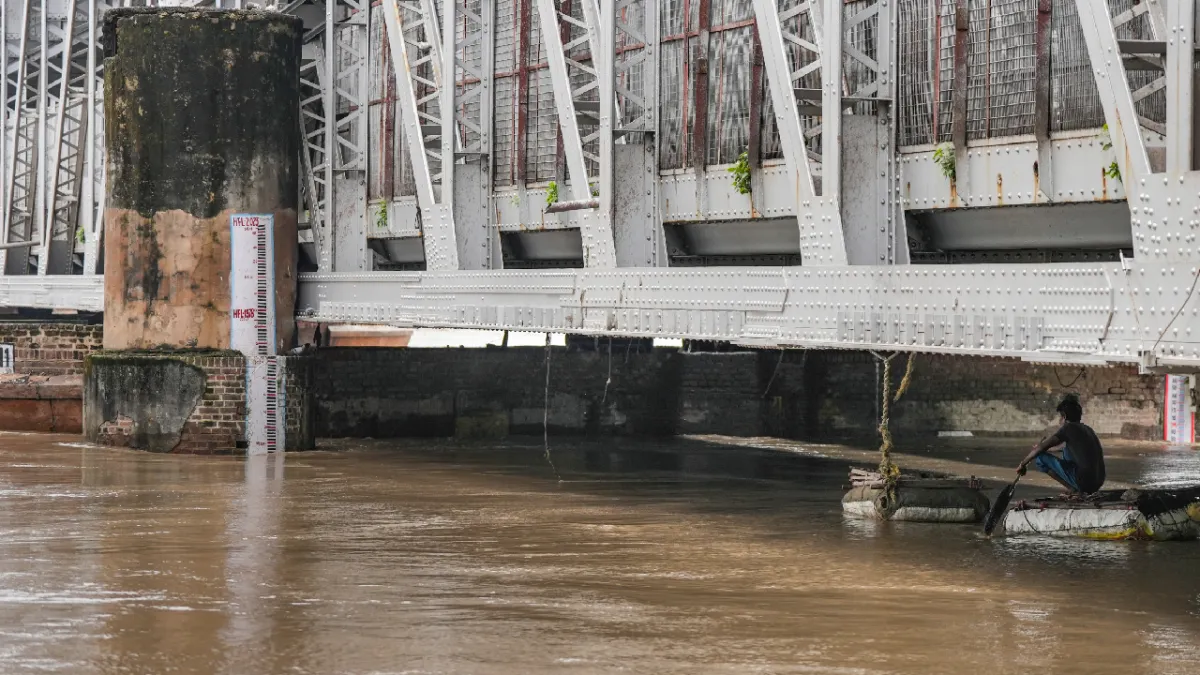
The Yamuna has surged to a critical 208.36 metres, just 0.30 metres short of its record flood level of 208.66 metres registered on 13 July 2023. Persistent rainfall has also brought a sharp fall in temperatures across the region.
he Yamuna river in Delhi soared to to 206.36 meters on Tuesday, only 2.30 metres below its all-time high of 208.66 metres recorded on July 13, 2023. The increase has been fuelled by massive inflows from upstream barrages, with 1.76 lakh cusecs released from Hathnikund, 93,260 cusecs from Wazirabad, and 1.15 lakh cusecs from Okhla in the wake of torrential rains across the Delhi-NCR region and in north India over the past few days.
Authorities shut down the Old Railway Bridge (ORB) and introduced emergency measures in low-lying areas. Public movement has been restricted, including a ban on idol immersions, while evacuation efforts are underway to protect residents at risk of flooding.
Yamuna water level to rise further
The Ministry of Jal Shakti projected the water level will reach 206.90 metres by 7 am on Wednesday. At 9 pm on Tuesday, the Yamuna was recorded at 206.36 metres at the ORB.
“As per current indications, the water level by 7 am on 3 September 2025 is likely to be 206.90 metres; thereafter, the water level will likely rise,” the ministry’s advisory stated.
Evacuations and transport suspension
Earlier in the day, the river crossed the evacuation mark at 206.03 metres by 4 pm, continuing to rise steadily. District authorities evacuated residents from flood-prone zones and suspended traffic across the Old Railway Bridge.
Floodwaters swept through Yamuna Khadar, submerging homes and forcing families to move into temporary relief camps set up by the authorities.
Several other areas, including Monastery Market near Kashmere Gate, Vasudev Ghat, and Yamuna Bazaar, were also inundated, leaving shops and houses under water and displacing many residents.
Heavy discharge from barrages
“The reason for the rising water level is mostly due to the high volumes of water released from the Wazirabad and Hathnikund barrages every hour. The forecast indicates a further increase in water level,” said an official from the Central Flood Control Room.
By 9 pm, the river had received 176,000 cusecs from Hathnikund and 93,260 cusecs from Wazirabad. Water released from these barrages typically takes 48 to 50 hours to reach Delhi.
 Shalu Shalu