
 By Khabar Rojana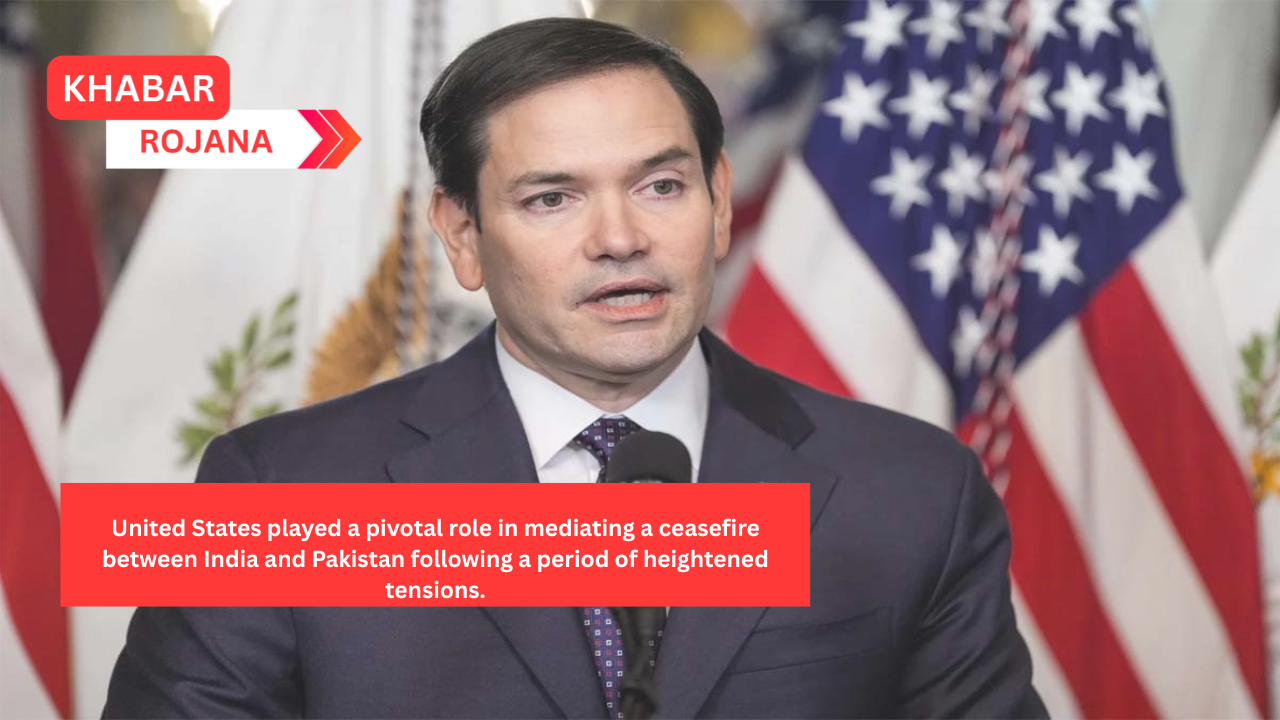
In May 2025, the United States played a pivotal role in mediating a ceasefire between India and Pakistan following a period of heightened tensions. The conflict escalated after a terrorist attack in Indian-administered Kashmir, leading to military exchanges between the two nuclear-armed neighbors. U.S. diplomatic efforts, led by Secretary of State Marco Rubio and Vice President JD Vance, were instrumental in de-escalating the situation.
The U.S. administration, recognizing the potential for a broader conflict, engaged in intensive diplomatic efforts. Secretary Rubio held discussions with British Foreign Secretary David Lammy and German Chancellor Friedrich Merz, emphasizing the importance of maintaining the ceasefire and encouraging direct dialogue between India and Pakistan .
Vice President Vance and Secretary Rubio communicated directly with Indian Prime Minister Narendra Modi and Pakistani officials. These conversations aimed to urge both sides to exercise restraint and engage in diplomatic dialogue to resolve the crisis .
The diplomatic efforts culminated in a ceasefire agreement, announced by U.S. President Donald Trump. The agreement was welcomed by various international leaders and organizations, including the United Nations, which viewed it as a vital step toward resolving longstanding issues
| Date | Event | U.S. Involvement |
|---|---|---|
| April 22 | Terrorist attack in Kashmir | Condemnation and call for restraint |
| May 7 | India’s Operation Sindoor | Urged de-escalation |
| May 8 | Pakistan’s retaliatory strikes | Diplomatic engagement intensified |
| May 10 | Ceasefire agreement announced | Mediated and announced by U.S. officials |
| May 12 | Ongoing diplomatic efforts | Continued support for dialogue |
The conflict’s escalation highlighted the fragile nature of India-Pakistan relations, particularly concerning the disputed region of Kashmir. The use of advanced military technologies, including drones and missile systems, underscored the potential for rapid escalation. The U.S.’s timely intervention was crucial in preventing a broader conflict.
Global leaders and organizations praised the ceasefire agreement. The European Union, the United Kingdom, Saudi Arabia, and the United Nations emphasized the importance of diplomacy and regional stability. These reactions underscored the international community’s vested interest in peace between India and Pakistan
Secretary Rubio reaffirmed the U.S.’s commitment to supporting direct dialogue between India and Pakistan. He emphasized the importance of maintaining open lines of communication to prevent future escalations .
India’s Operation Sindoor targeted alleged terrorist infrastructure in Pakistan, while Pakistan’s retaliatory strikes included drone and missile attacks. The use of advanced weaponry by both sides highlighted the increasing militarization of the conflict .
While the ceasefire has temporarily halted hostilities, the underlying issues remain unresolved. Continued diplomatic engagement and confidence-building measures are essential to achieving long-term peace in the region.
The conflict and subsequent ceasefire have significant implications for regional stability. Neighboring countries and international stakeholders must remain engaged to support ongoing peace efforts.
India and Pakistan have a history of conflicts, particularly over the Kashmir region. The recent escalation is a reminder of the persistent tensions and the need for sustained diplomatic efforts to address longstanding disputes.
Organizations like the United Nations play a crucial role in facilitating dialogue and supporting peace initiatives. Their involvement can help ensure that ceasefire agreements are upheld and that progress is made toward lasting resolutions.
The conflict has economic implications, including disruptions to trade and investment. Stability in the region is essential for economic growth and development.
Achieving lasting peace between India and Pakistan requires addressing core issues, including territorial disputes and concerns over terrorism. Constructive dialogue and mutual trust are key components of this process.
The U.S.’s diplomatic intervention in the India-Pakistan conflict of May 2025 was instrumental in averting a broader crisis. While the ceasefire is a positive development, sustained efforts are necessary to address the root causes of the conflict and to build a foundation for enduring peace.
 Shalu Shalu