
 By Khabar Rojana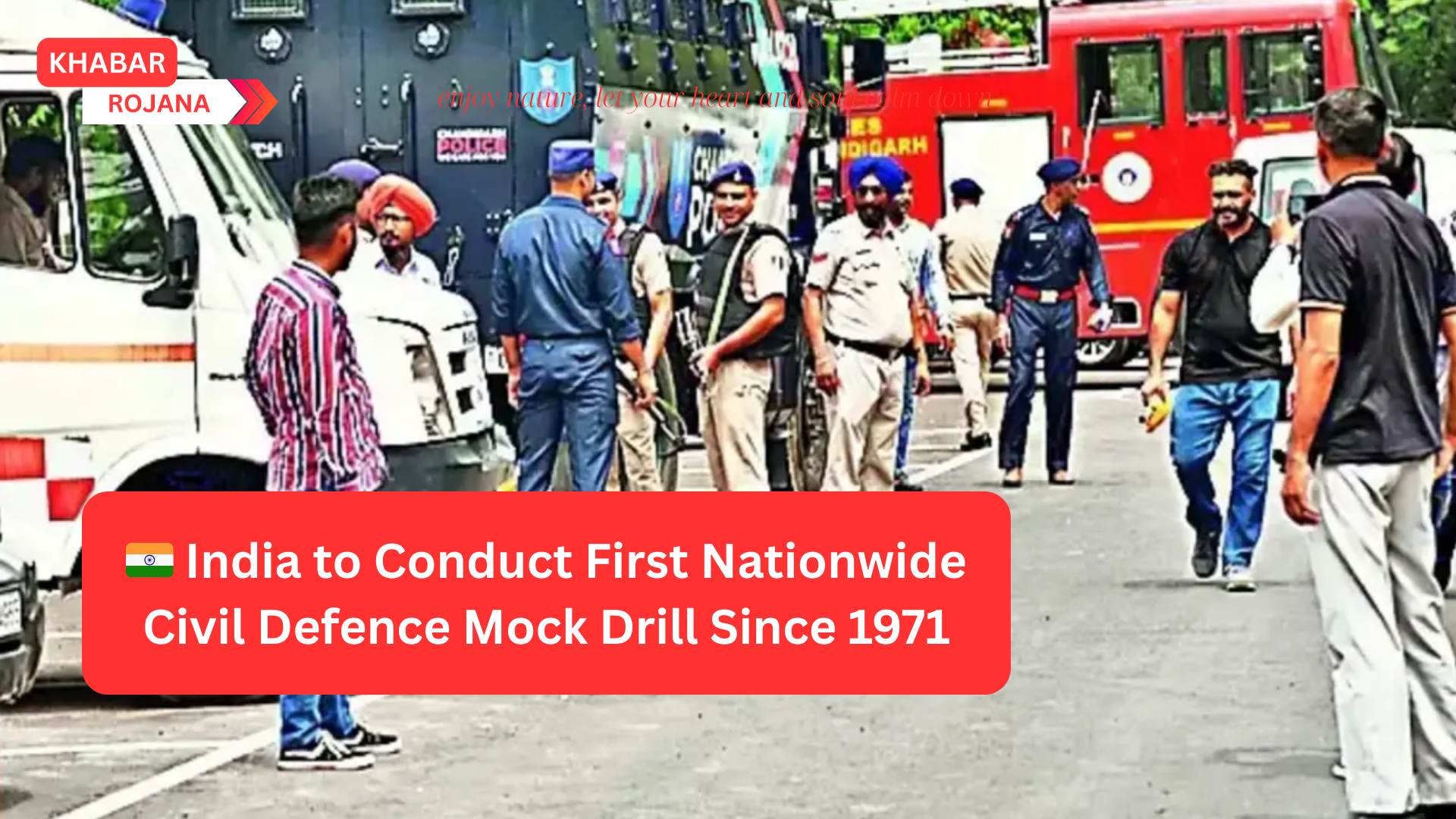
India is taking a historic step toward national preparedness by organizing its first nationwide civil defence mock drills in over five decades. Scheduled for May 7, 2025, this large-scale simulation is being launched to strengthen the country’s disaster response framework and public safety systems.
After decades of relative silence in civil defence activities, India is recognizing the increasing threat of natural disasters, industrial hazards, and potential attacks. This drill is not just a formality—it’s a serious test of our emergency response infrastructure and coordination.
| Feature | Details |
|---|---|
| 🔧 Organized By | Ministry of Home Affairs (MHA) |
| 🌐 Coverage | All districts across India |
| 🚨 Simulations Include | Air raids, bomb threats, fires, CBRN emergencies |
| 🧑🚒 Involvement | Local police, fire brigades, NDRF, hospitals, volunteers |
| 📍 Objective | Assess readiness & educate citizens on emergency response |
| 🗓️ Date | May 7, 2025 |
The primary objectives of this operation are:
- ✅ Test inter-agency coordination between civil defence, police, health, and transport departments
- ✅ Educate citizens on evacuation protocols, emergency contacts, and safety behavior
- ✅ Identify gaps in emergency infrastructure, training, and public awareness
- ✅ Simulate realistic threat scenarios to prepare for both man-made and natural disasters
On drill day, citizens may experience mock alarms, sirens, or supervised evacuations. Don’t panic — it’s all part of the plan.
🔊 Activities may include:
- Air raid sirens and lockdown simulations
- Fire drills in high-rise buildings or public places
- Medical emergency responses at hospitals
- Transport shutdown drills at bus/train stations
- Roleplay evacuations in schools, malls, offices
This drill will simulate responses to several kinds of emergencies:
- 🌪️ Natural Disasters (floods, earthquakes)
- ☢️ CBRN: Chemical, Biological, Radiological, Nuclear threats
- 🔥 Fire and explosion hazards
- 🚨 Terror threats and air raids
- 🦠 Biological outbreaks
State governments have been encouraged to involve local volunteers and organizations. In places like Himachal Pradesh, a program is underway to train 1% of the population as civil defence volunteers.
👥 Benefits of community involvement:
- Builds trust between government and public
- Enhances public readiness in real crises
- Promotes a culture of resilience and awareness
With increasing global instability, cyber threats, and climate-driven disasters, such drills place India in alignment with international safety protocols. Countries like Japan and the US regularly conduct similar civil defence activities.
The last nationwide civil defence drill took place in 1971, in the context of the Indo-Pak war. Since then, India has faced numerous disasters—both natural and man-made—but lacked unified drills of this scale.
This initiative finally addresses that decades-long gap, ensuring every district, from rural to urban, participates in readiness-building.
🛑 Don’t be alarmed if you hear sirens or see emergency simulations on May 7. This is a vital national step to prepare, protect, and prevent in the face of emergencies.
 Shalu Shalu
Hi, this is a comment.
To get started with moderating, editing, and deleting comments, please visit the Comments screen in the dashboard.
Commenter avatars come from Gravatar.