
 By Khabar Rojana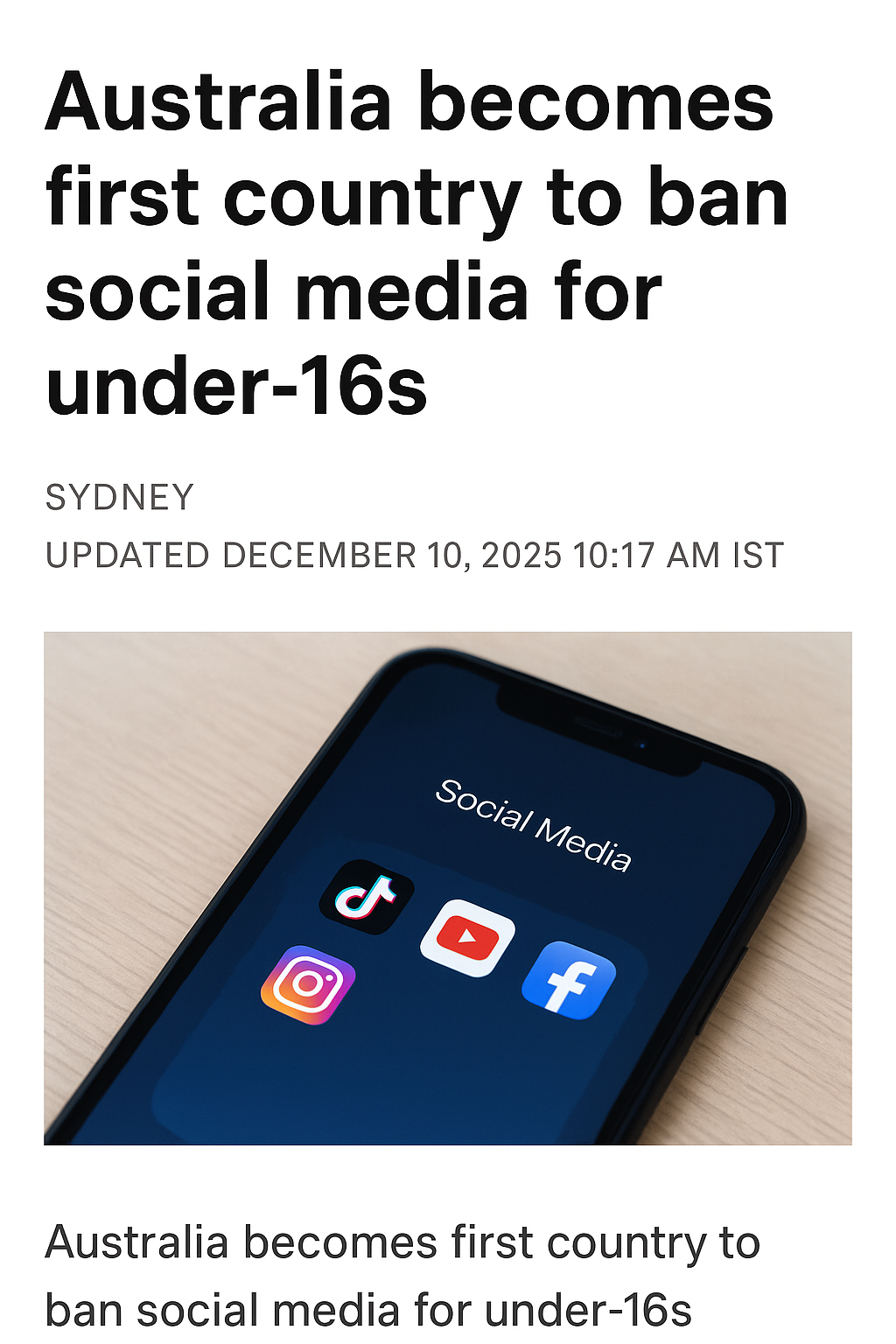
Australia has taken a groundbreaking step by becoming the first country in the world to ban social media for children under the age of 16. Effective from December 10, 2025, popular platforms including TikTok, YouTube, Instagram, Facebook, Snapchat, X, Twitch, Threads, and Kick will now be required to block access for users below this age threshold.
The move has sparked global attention, as it directly addresses growing concerns about the impact of social media on young users, ranging from mental health issues and cyberbullying to addictive screen time and exposure to inappropriate content.
Prime Minister Anthony Albanese hailed the legislation as “a proud day” for families, emphasizing that traditional safeguards, such as parental controls and age verification tools, have not been sufficient to protect children from online harms. The government argues that this law will ensure a safer digital environment for minors while encouraging social media platforms to take greater responsibility for their young users.
Key Features of the Law
Platforms affected: TikTok, YouTube, Instagram, Facebook, Snapchat, X, Twitch, Threads, Kick
Age restriction: Children under 16 are prohibited from using these platforms
Penalty for non-compliance: Platforms failing to block underage users could face fines of up to A$49.5 million ($33 million)
Implementation date: December 10, 2025 (Midnight, 1300 GMT)
The law requires social media companies to take “reasonable steps” to verify the age of their users and prevent underage accounts from accessing their platforms. Experts have noted that this is one of the strictest age-gating policies globally and could set a benchmark for other countries looking to regulate online spaces for minors.
Legal Challenges
The legislation has not been without controversy. Reddit, one of the affected platforms, has announced that it will challenge the law in court. The company argues that enforcing such restrictions is technically difficult, and the government’s approach is too broad. Legal experts suggest that the case could have significant implications for how countries regulate digital content and enforce age verification policies on global platforms.
Global Context
Australia’s move has drawn international attention. Countries including Denmark, New Zealand, and Malaysia are reportedly studying the law and may consider similar age-specific restrictions on social media. As the first nation to implement such a comprehensive ban, Australia has now become a test case for governments worldwide seeking to balance child safety with digital freedom and innovation.
India Perspective
In India, concerns about children’s online safety are also growing. Parents, educators, and child advocacy groups have repeatedly raised alarms over exposure to harmful content, cyberbullying, and excessive screen time. Australia’s legislation underscores the need for Indian authorities to evaluate stricter measures, improve digital literacy, and implement policies that protect children without completely restricting access to technology.
Conclusion
Australia’s under-16 social media ban represents a historic milestone in digital governance and child protection. While the law aims to shield children from online harms, it also raises critical questions about the balance between safety and freedom in the digital age. With legal challenges on the horizon and other nations observing closely, this landmark move could set a global precedent for age-specific social media regulations in the years to come.
 Shalu Shalu