
 By Khabar Rojana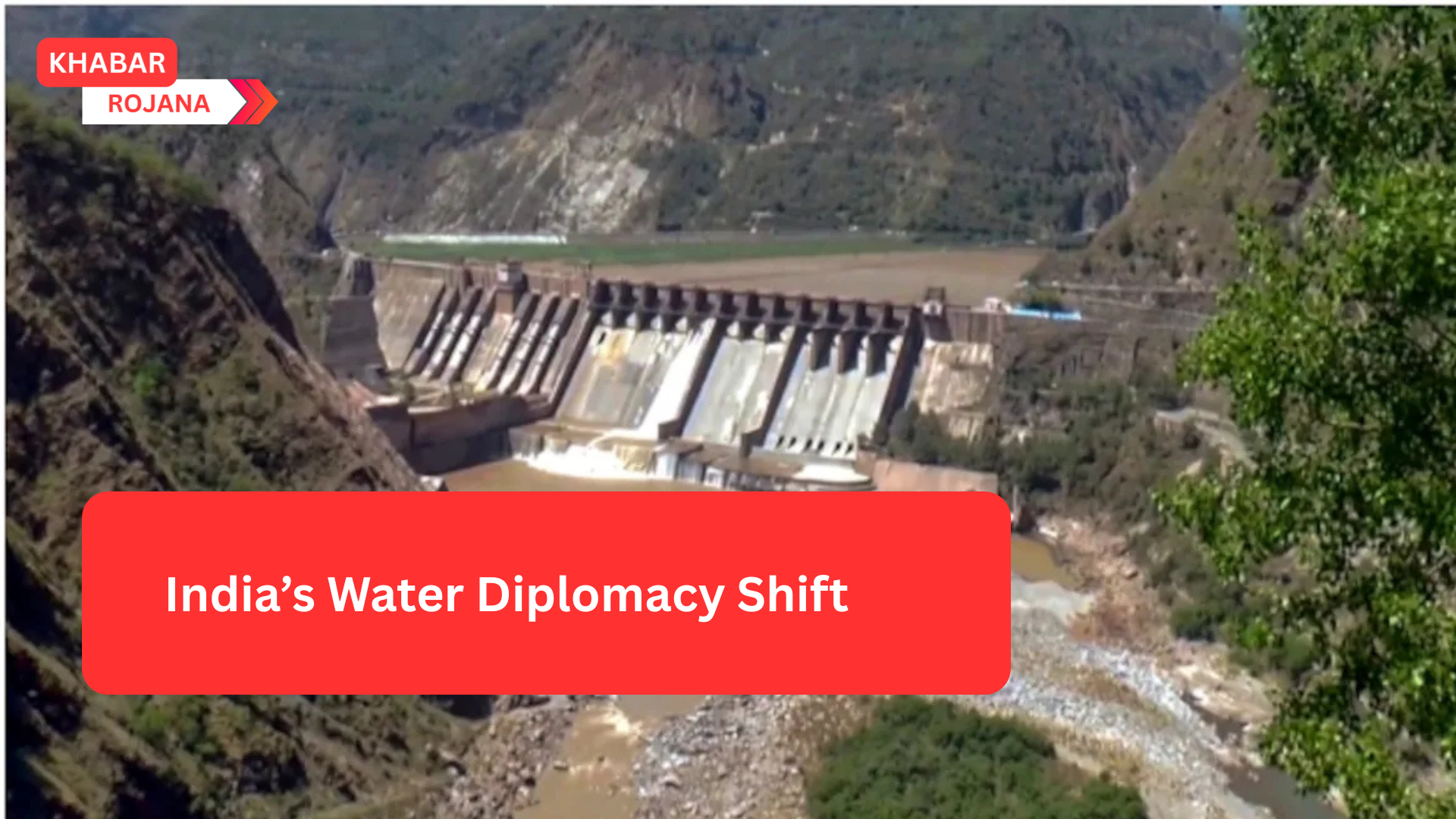
In the wake of India’s recent pause on the Indus Waters Treaty (IWT) obligations, the country’s decision to release water from key Jammu and Kashmir dams—out of schedule—has sparked national and international attention. The strategic move comes as tensions rise in South Asia over water sharing and regional control.
The Indus Waters Treaty, signed in 1960 between India and Pakistan and brokered by the World Bank, has been a cornerstone of water-sharing agreements for over six decades. It allocated:
- 🟦 Eastern rivers (Ravi, Beas, Sutlej) — to India
- 🟩 Western rivers (Indus, Jhelum, Chenab) — to Pakistan
Despite multiple wars and diplomatic rifts, the treaty has endured. However, recent border tensions and terror-related incidents have led India to reconsider its approach.
In early May 2025, India released a large volume of water from multiple dams in Jammu and Kashmir, including the Salal and Baglihar Dams—before scheduled timelines and without coordinated alerts to Pakistan. This led to downstream flooding threats and strained communications between the two nations.
| Dam Name | River | Location | Activity | Notified? |
|---|---|---|---|---|
| Salal Dam | Chenab | J&K | Premature water release | ❌ |
| Baglihar Dam | Chenab | Ramban, J&K | Sudden discharge reported | ❌ |
| Dulhasti Dam | Chenab | Kishtwar, J&K | Normal operation | ✅ |
The untimely release of water holds both symbolic and tactical significance:
- India may be signaling a harder stance in response to continued cross-border instability and stalled treaty reform talks.
- It serves as a reminder of India’s upstream control over key water sources feeding into Pakistan.
- Could act as a pressure tactic to accelerate pending negotiations on water projects like Kishanganga and Ratle.
- May also test India’s ability to act unilaterally without international backlash.
Environmental groups and downstream communities in Pakistan-occupied Kashmir (PoK) raised alarms over the abrupt water surges, citing:
- 🏞️ Risk of flash floods
- 🚜 Disruption to agriculture in the region
- ⚖️ Violation of transboundary water sharing ethics
While the Indian government has not issued an official statement, top sources from the Ministry of Jal Shakti hinted that the move was part of a “routine seasonal adjustment.” However, satellite data and on-ground monitoring suggest unusually high discharges not tied to monsoon or snowmelt triggers.
Pakistan has sought clarification through diplomatic channels and may bring the issue to the Permanent Indus Commission (PIC) or escalate it to the International Court of Arbitration, depending on how the matter unfolds.
India’s actions reflect a potential policy shift on the Indus Waters Treaty, indicating a move from passive cooperation to active strategic engagement. Whether this results in treaty renegotiations, increased hydro-diplomacy, or further regional strain remains to be seen.
- India released water prematurely from J&K dams post-IWT hold.
- The move signals a possible diplomatic or strategic intention.
- Environmental and political reactions have emerged from Pakistan.
- The future of water-sharing between the two nations is entering a new phase.
Stay tuned as India navigates the flow of both rivers and geopolitics. 🌍💦
 Shalu Shalu