
 By Khabar Rojana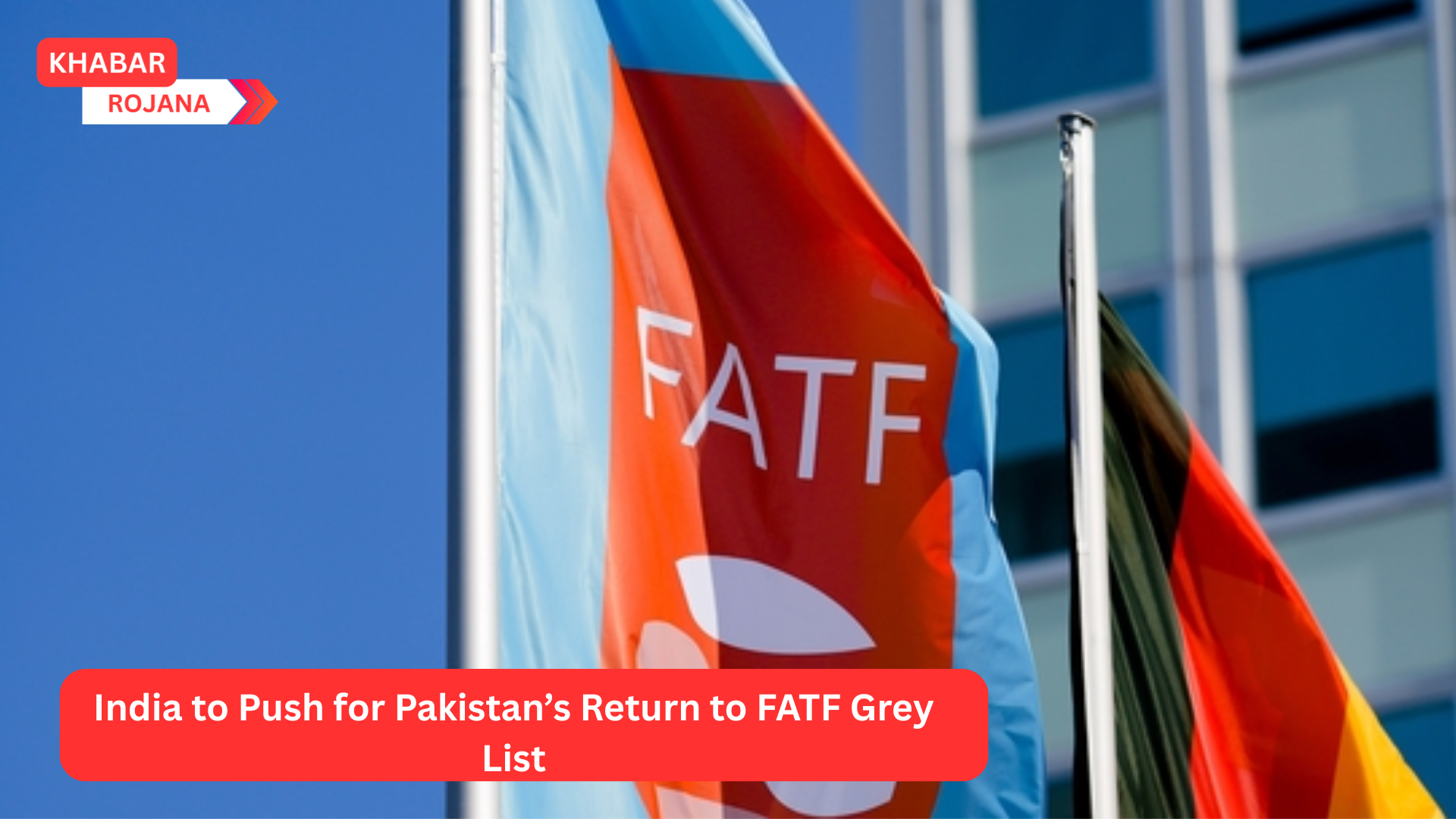
India is preparing to present a strong case to the Financial Action Task Force (FATF) for placing Pakistan back on its “grey list” due to alleged lapses in combating terrorism financing and money laundering. This move comes amid growing international concern about Pakistan’s compliance with global anti-terror standards.
The FATF grey list includes countries under increased monitoring for their strategic deficiencies in countering money laundering and terror financing. Pakistan was removed from the list in October 2022 after showing progress on a 34-point action plan.
Indian officials argue that Pakistan has backslid on its commitments. New evidence reportedly indicates continued terror activities operating from Pakistani soil, with inadequate efforts to dismantle related financial networks.
India will raise the issue at the upcoming FATF plenary session in Paris. The goal is to present recent intelligence and data showing that Pakistan is not fully adhering to FATF mandates.
India plans to work closely with key FATF member countries, including the US, France, and Germany, to gain support. These countries have previously echoed concerns about Pakistan’s inconsistent anti-terror measures.
Apart from direct lobbying, India may collaborate with global intelligence partners to present a detailed, data-backed case. These efforts are designed to build a narrative of credible evidence.
Pakistan was first placed on the FATF grey list in 2008, and again in 2012 and 2018. Though removed in 2022, many observers believe that the country’s compliance was superficial and politically motivated.
Indian agencies are reportedly preparing a dossier including recent cross-border terror incidents, financial trails, and reports on the activities of UN-designated terrorists allegedly operating freely in Pakistan.
Pakistani authorities have dismissed India’s claims as politically driven. They maintain that their compliance with FATF standards is ongoing and robust.
If Pakistan is relisted, it could face severe economic consequences. Grey listing makes it harder for countries to access global financial markets and secure foreign investment.
FATF is not just a financial watchdog; its policies influence global counterterrorism financing frameworks. India argues that non-compliance by any nation compromises international security.
A grey-list status could significantly affect Pakistan’s economy, already struggling with inflation and foreign exchange shortages. Aid from international institutions like the IMF could also be impacted.
India’s diplomatic push is not just economic—it’s also a strong political signal aimed at keeping pressure on Pakistan over cross-border terrorism and regional instability.
India hopes to rally support from Western democracies that share concerns over terror financing and seek greater transparency from countries like Pakistan.
India wants to ensure consistent monitoring of countries that pose terror threats. By advocating Pakistan’s re-inclusion, it aims to promote accountability and global security.
As the FATF plenary approaches, all eyes are on India’s diplomatic efforts. Whether or not Pakistan returns to the grey list, the issue has once again highlighted the fragile balance between diplomacy, security, and economic stability in South Asia.
| 🧾 Topic | 📋 Details |
|---|---|
| 🌍 Organization | FATF (Financial Action Task Force) |
| 🇮🇳 India’s Aim | To return Pakistan to the FATF grey list |
| 🧩 Reason | Alleged failure in curbing terror financing and money laundering |
| 📆 Proposed Timing | Next FATF plenary session in Paris |
| 🔍 Key Evidence | Terror activity data, financial tracking, UN-designated terrorists |
| 🧑🤝🧑 Supporting Countries | USA, France, Germany |
| 🏦 Impact on Pakistan | Restricted financial access, potential economic setbacks |
| 🌐 Global Concern | Risk to international anti-terror frameworks |
| 🗨️ Pakistan’s Stance | Denial of claims, calls India’s move politically motivated |
| 📉 Historical Precedent | Previously grey-listed in 2008, 2012, 2018 |
 Shalu Shalu