
 By Khabar Rojana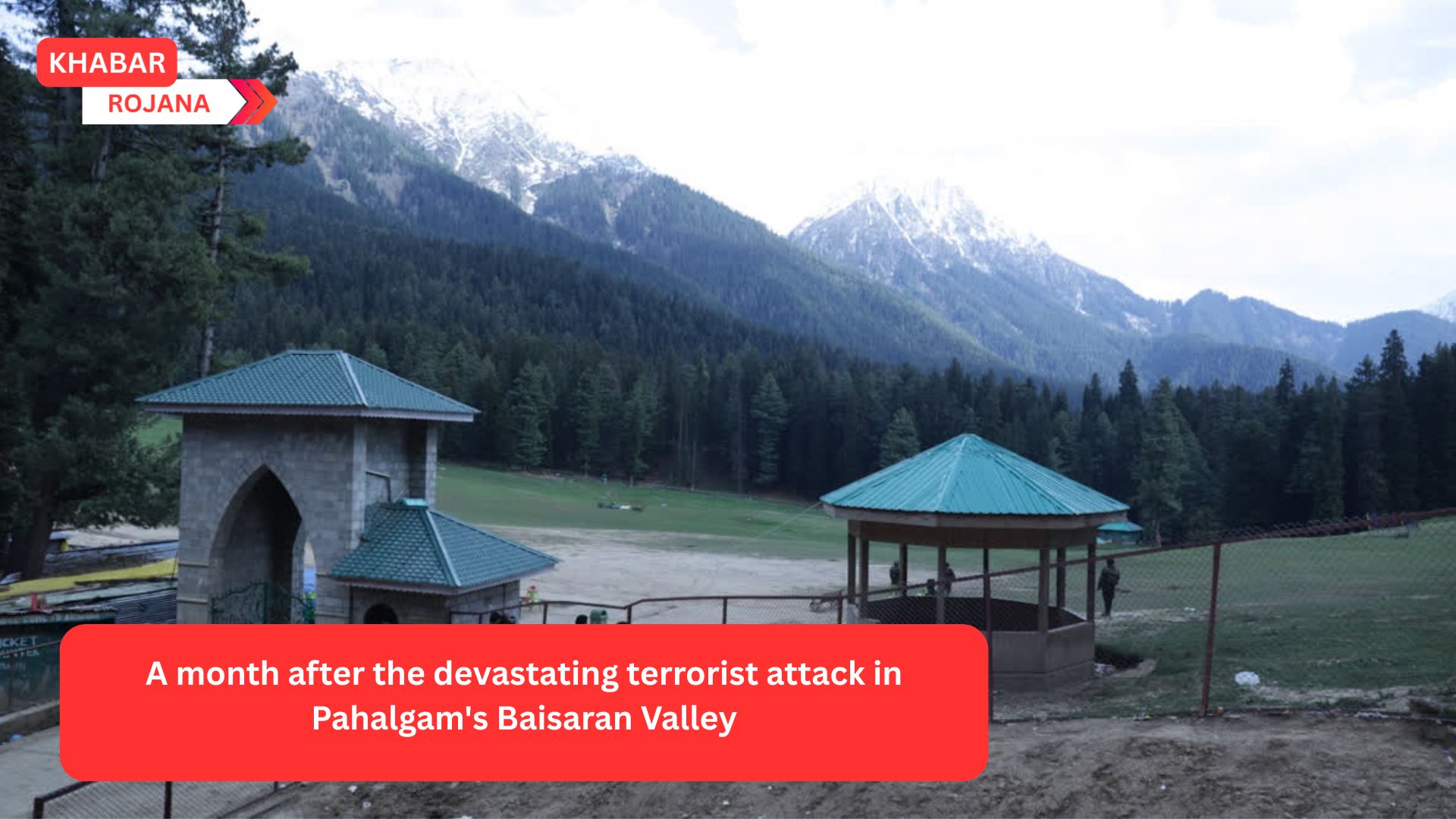
A month after the devastating terrorist attack in Pahalgam’s Baisaran Valley, the once-thriving tourist hub remains eerily silent. The assault, which claimed 26 lives, has left a profound impact on the region’s economy and psyche.
On April 22, 2025, gunmen disguised in local security uniforms attacked tourists in Baisaran Valley, near Pahalgam. Witnesses reported that the assailants separated men from women and children, targeting those unable to recite the Islamic Kalima. Among the victims were Indian and foreign tourists, including military personnel and civilians.
The attack led to a mass exodus of tourists, with occupancy rates in hotels and houseboats plummeting. Graphic media coverage intensified public fear, resulting in widespread booking cancellations and no new reservations.
Tourism, accounting for nearly 7% of Jammu and Kashmir’s GDP, has been severely affected. The downturn has caused widespread unemployment among hotel staff, taxi drivers, and artisans.
In Pahalgam, local businesses such as hotels and restaurants stand largely empty. Business owners like Mohit Kumar wait in vain for customers, symbolizing the pervasive desolation that has taken over the once-bustling area.
Despite the tragedy, the local community has shown resilience. Cab drivers offered free rides to fleeing tourists, and hotels waived bills to support traumatized visitors. Horse owners, who previously earned about Rs1,000 a day, now face uncertainty.
In response to the attack, the Jammu and Kashmir government temporarily closed 48 tourist destinations across the Valley. Security forces conducted audits of 87 places, leading to redeployment and additional checkpoints to secure access.
A fragile and uneasy calm has returned to Kashmir after an intense military confrontation between India and Pakistan, sparked by the militant attack. Despite a U.S.-brokered ceasefire, fear and devastation persist in the region.
The Travel Agents Association of India (TAAI) has initiated a campaign titled “Let’s Visit J&K” to revive tourism in Jammu & Kashmir. The campaign emphasizes the region’s historical and cultural significance and appeals for solidarity to prevent the region’s allure from being overshadowed by terrorism.
Just days after the attack, foreign and domestic tourists began returning to Pahalgam, bringing a sense of normalcy and hope back to the region. Tourists from Kolkata and Bangalore expressed feelings of safety and praised the hospitality.
Locals have staged protests condemning the terror attack, asserting their solidarity with the victims. Chief Minister Omar Abdullah highlighted the spontaneous public outcry against the violence.
The Army is conducting security audits of popular tourist areas and considering redeployment of troops to areas marked vulnerable. This exercise aims to ensure the safety of tourists and an incident-free Amarnath Yatra.
Officials and industry insiders say recovery could take six months or more, contingent on peace between India and Pakistan. Local leaders stress the need for a long-term resolution of the Kashmir conflict to ensure sustained peace and economic stability in the region.
Tourists from across India have displayed remarkable resilience and optimism, stating that such incidents can happen anywhere and expressing confidence in their travel agents and tour groups.
The government arranged additional flights between Delhi and Srinagar and a special train from Katra to Delhi for stranded tourists. Security forces have continued raids on suspected houses to prevent further incidents.
Despite the challenges, the return of tourists and the community’s resilience offer hope for Pahalgam’s recovery. With coordinated efforts from the government, security forces, and the local population, there is optimism that the region will overcome this tragedy and restore its status as a beloved tourist destination.
Impact Overview:
| Sector | Pre-Attack Status | Post-Attack Impact | Recovery Efforts |
|---|---|---|---|
| Tourism | Thriving with 3 million visitors in 2024 | Collapse with mass cancellations | “Let’s Visit J&K” campaign initiated |
| Local Businesses | High occupancy and earnings | Significant revenue loss | Discounts and incentives offered |
| Employment | Approximately 10,000 jobs | Widespread unemployment | Community support initiatives |
| Security | Standard deployments | Increased audits and redeployments | Enhanced security measures |
 Shalu Shalu