
 By Khabar Rojana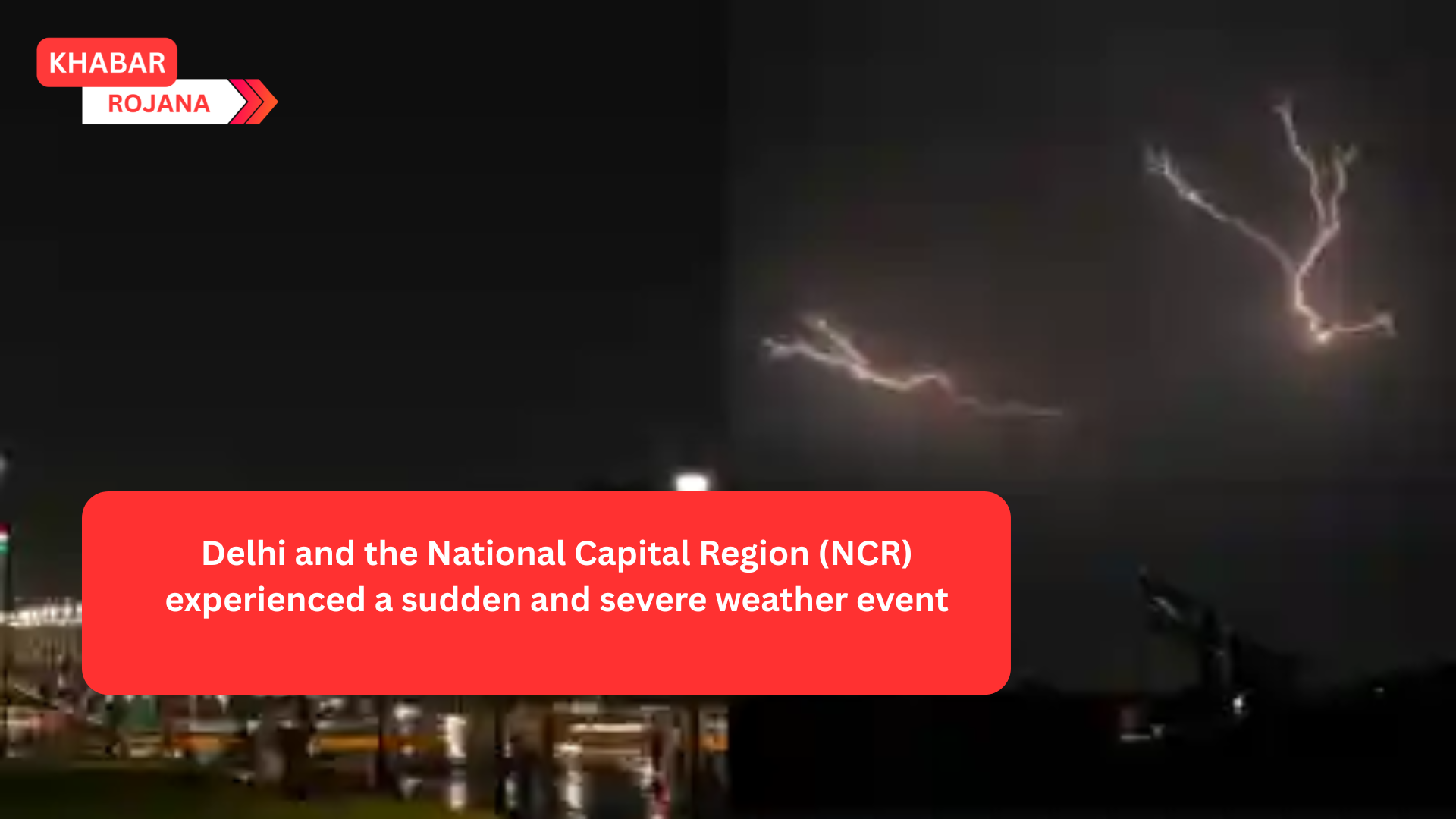
On the evening of May 21, 2025, Delhi and the National Capital Region (NCR) experienced a sudden and severe weather event. A powerful dust storm, accompanied by heavy rain and hail, caused significant disruptions across the city. The storm led to fatalities, injuries, infrastructural damage, and widespread service interruptions.
After a day of extreme heat, with a “feels-like” temperature reaching 50.2°C, a cyclonic circulation over Haryana triggered a violent storm in the evening. Wind speeds soared up to 79 km/h, bringing dust, rain, and hail to the region.
The storm resulted in the deaths of at least two individuals in Delhi. A 22-year-old man was killed by a falling tree in Gokulpuri, and a person with a disability died when an electric pole collapsed near Lodhi Road. Additionally, at least 11 people sustained injuries in various incidents related to the storm.
Operations at Indira Gandhi International Airport were severely affected. Between 7:45 PM and 8:45 PM, over 50 flights were delayed, and at least 10 flights were diverted to nearby airports due to poor visibility and wind shear conditions.
Delhi Metro services, particularly on the Yellow Line, experienced significant delays. Passengers were stranded for hours as the storm disrupted power supplies and track operations.
The storm caused widespread power outages in Noida, Greater Noida, and Ghaziabad. High-speed winds led to the toppling of electrical poles and transformers, resulting in blackouts lasting between three to five hours in many areas.
Numerous trees were uprooted, and structures were damaged across the city. In Mukherjee Nagar, a portion of a bridge’s grill fell, injuring at least six people. In Mangolpuri, a balcony collapse injured four individuals.
Fallen trees and waterlogged streets led to massive traffic jams. Key roads were blocked, and commuters faced long delays as emergency services worked to clear the debris.
Emergency services were promptly deployed to address the aftermath. Rescue operations were conducted, and efforts were made to restore power and clear roads.
The India Meteorological Department (IMD) issued a red alert, warning of continued unstable weather, including light to moderate rain, thunder, and gusty winds in the coming days.
Authorities advised residents to stay indoors during severe weather conditions, avoid areas with potential for falling trees or structures, and to check for updates on public transport services.
Airlines such as IndiGo, Air India, and SpiceJet issued advisories urging passengers to check flight statuses before heading to the airport, given the disruptions caused by the storm.
The sudden storm disrupted daily routines, with many residents caught off guard. Schools and offices faced challenges in managing schedules due to transportation and power issues.
The storm highlighted the vulnerability of urban infrastructure to extreme weather events, raising concerns about climate resilience and the need for improved disaster preparedness.
Local communities came together to assist those affected, providing shelter, food, and support to individuals stranded or impacted by the storm.
As the city recovers, authorities emphasize the importance of preparedness for such sudden weather events, urging citizens to stay informed and take necessary precautions.
Summary Table: Delhi-NCR Storm Impact
| Aspect | Details |
|---|---|
| Date & Time | May 21, 2025, Evening |
| Weather Conditions | Dust storm, heavy rain, hail, wind speeds up to 79 km/h |
| Fatalities | At least 2 confirmed deaths |
| Injuries | At least 11 reported injuries |
| Flight Operations | Over 50 flights delayed, at least 10 diverted |
| Metro Services | Significant delays, especially on Yellow Line |
| Power Outages | Widespread in Noida, Greater Noida, Ghaziabad |
| Infrastructure Damage | Uprooted trees, collapsed structures, blocked roads |
| Emergency Response | Deployment of rescue teams, restoration of services |
| Public Advisory | Stay indoors, avoid travel, check transport updates |
This event underscores the need for robust infrastructure and emergency preparedness to mitigate the impacts of sudden and severe weather phenomena.
 Shalu Shalu