
 By Khabar Rojana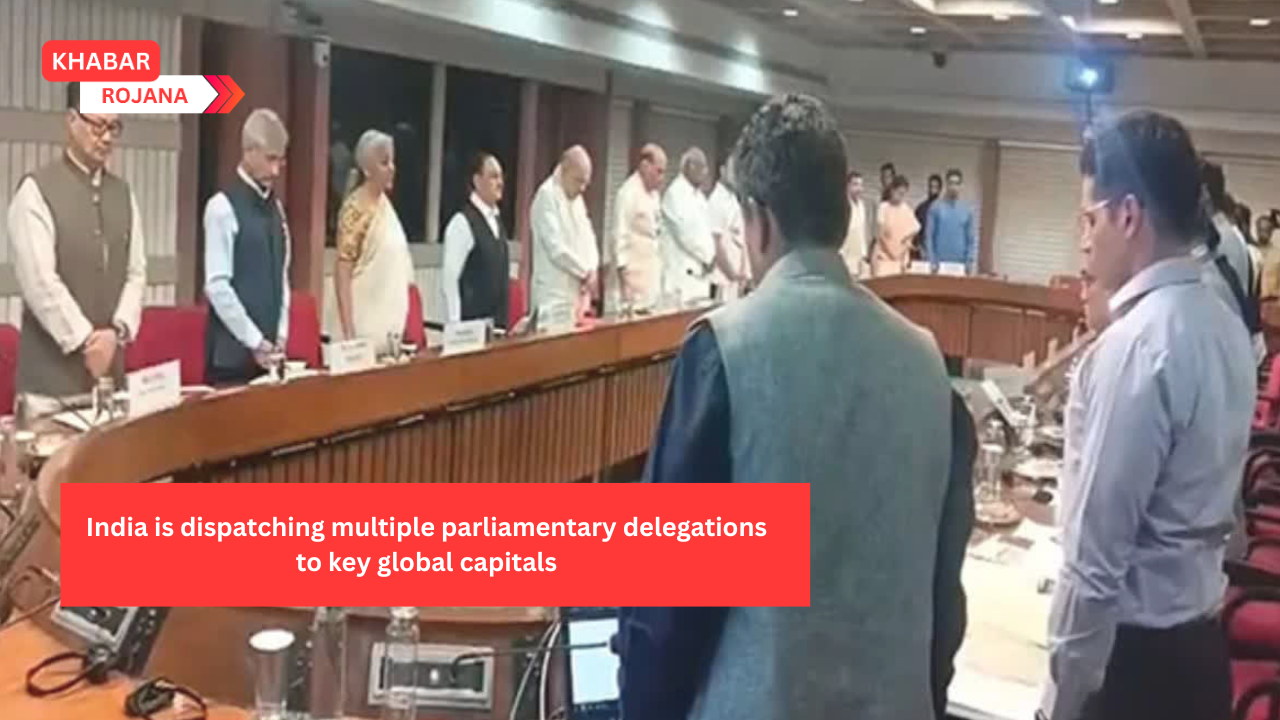
India has embarked on a significant diplomatic initiative to expose Pakistan’s alleged involvement in cross-border terrorism. This move follows the tragic Pahalgam attack and aims to garner international support against state-sponsored terrorism.
In response to the Pahalgam terror attack on April 22, 2025, which claimed 26 lives, India is dispatching multiple parliamentary delegations to key global capitals. These delegations will brief international counterparts on Pakistan’s purported role in supporting terrorism.
Each delegation comprises Members of Parliament from various political parties, senior diplomats, and other officials. Notable leaders include Shashi Tharoor, Ravi Shankar Prasad, Supriya Sule, and Kanimozhi.
The delegations will visit countries such as the United States, United Kingdom, Japan, France, Germany, Australia, and Brazil. The objective is to present evidence and narratives highlighting Pakistan’s alleged support for terrorist activities.
India’s military response, termed Operation Sindoor, signifies a shift in its counter-terrorism strategy. The operation targeted terrorist infrastructure across the border, aiming to dismantle networks supporting cross-border terrorism.
The inclusion of opposition leaders in the delegations underscores a unified political stance against terrorism. Despite political differences, parties have come together to address the pressing issue of cross-border terrorism.
Defense Minister Rajnath Singh has urged the International Monetary Fund to reconsider its recent loan to Pakistan, expressing concerns that the funds might be diverted to support terrorist infrastructure.
Prime Minister Narendra Modi has emphasized that India will not tolerate any form of terrorism. He stated that any future terror attacks would be treated as acts of war, signaling a more aggressive posture against terrorism.
India has been actively briefing international organizations, including the United Nations and G20 nations, about Pakistan’s alleged role in supporting terrorism. The aim is to build a global consensus against state-sponsored terrorism.
Pakistan has consistently denied involvement in the Pahalgam attack and other terrorist activities. Its officials have dismissed India’s allegations as baseless and have accused India of fabricating evidence.
India’s concerns about Pakistan’s support for terrorism are not new. Past incidents, such as the 2016 Uri attack and the 2019 Pulwama attack, have been attributed to Pakistan-based terrorist groups, leading to heightened tensions between the two nations.
| Aspect | Details |
|---|---|
| Initiation Date | Post-Pahalgam Attack (April 22, 2025) |
| Delegation Leaders | Shashi Tharoor, Ravi Shankar Prasad, Supriya Sule, Kanimozhi |
| Target Countries | USA, UK, Japan, France, Germany, Australia, Brazil |
| Operation Name | Operation Sindoor |
| IMF Loan Concern | $1 Billion loan to Pakistan |
| PM Modi’s Statement | Future terror attacks will be treated as acts of war |
| Pakistan’s Response | Denial of involvement, accusation of fabricated evidence |
India’s diplomatic efforts aim to isolate Pakistan on the global stage, urging nations to reconsider their engagements and financial dealings with Pakistan in light of the alleged support for terrorism.
In anticipation of potential escalations, India has conducted civil defense drills to prepare its citizens and infrastructure against possible threats.
India’s stance has garnered support from various nations, with calls for Pakistan to ensure its territory is not used for terrorist activities. The extradition of Tahawwur Rana by the US is seen as a significant step in this direction.
The Indian government is leveraging media platforms to disseminate information about Pakistan’s alleged involvement in terrorism, aiming to shape public opinion and garner international support.
India’s proactive diplomatic and military measures signify a robust approach to counter-terrorism. The international community’s response in the coming weeks will be crucial in determining the effectiveness of India’s strategy.
 Shalu Shalu