
 By Khabar Rojana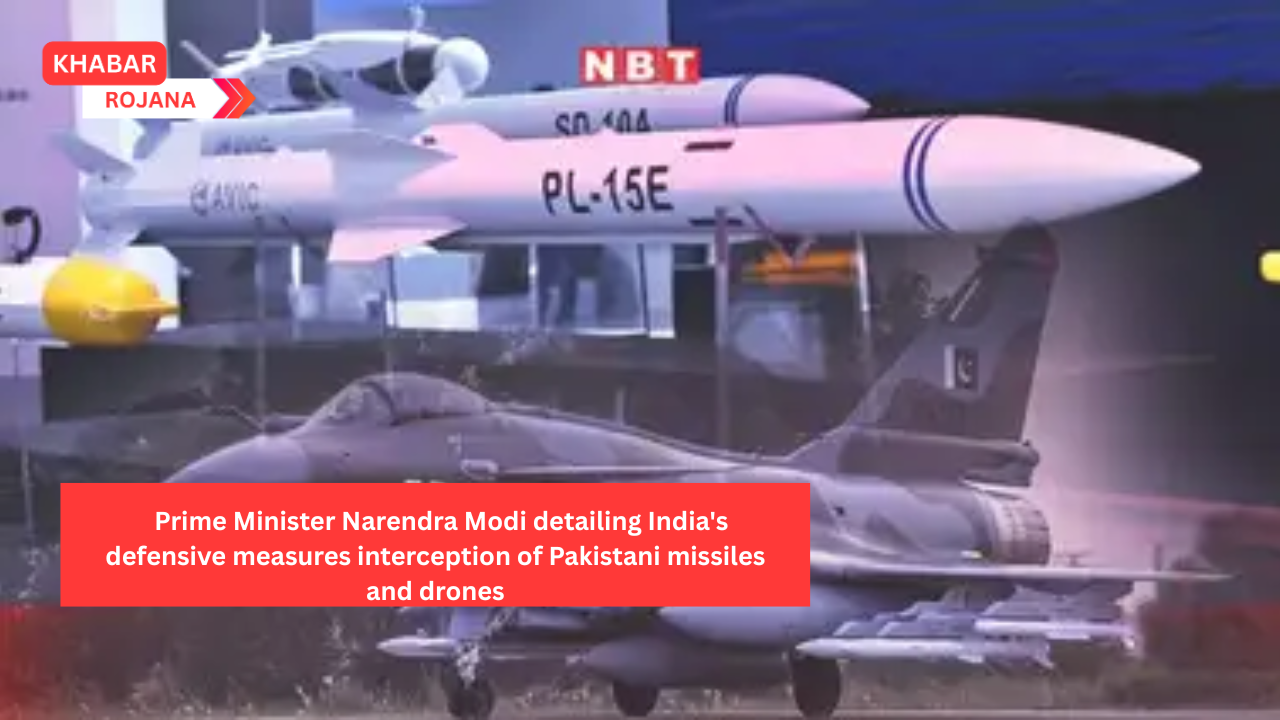
In the wake of escalating tensions between India and Pakistan, Prime Minister Narendra Modi addressed the nation on May 12, 2025, detailing India’s defensive measures against aerial threats, including the interception of Pakistani missiles and drones.
India’s advanced air defense systems successfully intercepted and destroyed all incoming Pakistani missiles and drones, preventing any damage to civilian infrastructure.
Among the intercepted threats were Chinese-made PL-15 air-to-air missiles and Turkish-manufactured drones, indicating external military support for Pakistan.
Operation Sindoor, launched by India in response to the Pahalgam attack, targeted terrorist infrastructure in Pakistan and Pakistan-administered Kashmir, significantly damaging terrorist strongholds.
India’s military intelligence and coordination among the Army, Navy, and Air Force played a crucial role in the successful execution of Operation Sindoor and the interception of aerial threats.
The intercepted Pakistani missiles and drones were reportedly aimed at civilian targets, including schools, colleges, temples, and homes, but India’s defense systems prevented any casualties or damage.
A U.S.-brokered ceasefire, facilitated by President Donald Trump, helped de-escalate the conflict, although Prime Minister Modi emphasized that India had merely “paused” its military operations and remained vigilant.
The recovery of Pakistani artillery and missile wreckage pointed to close military collaborations between Pakistan, China, and Turkey, raising concerns about regional security dynamics.
| Threat Type | Origin Country | Outcome |
|---|---|---|
| PL-15 Missiles | China | Intercepted and destroyed |
| Turkish Drones | Turkey | Intercepted and destroyed |
| Other Aerial Threats | Pakistan | Neutralized by air defense |
Prime Minister Modi assured the nation of India’s preparedness and resilience, stating that any future aggression would be met with decisive action, and emphasizing the country’s strategic superiority.
India’s successful defense against aerial threats highlighted the effectiveness of its domestically manufactured weaponry and the importance of continued investment in defense technology.
The interception of Pakistani missiles and drones underscored the importance of robust air defense systems and intelligence capabilities in modern warfare, setting a precedent for future conflicts.
While the U.S. played a role in brokering a ceasefire, the involvement of China and Turkey in supporting Pakistan’s military efforts raised international concerns about regional stability.
Despite the ceasefire, Prime Minister Modi maintained a firm stance, indicating that dialogue with Pakistan would only proceed if Islamabad ceases support for terrorism.
- April 22, 2025: Pahalgam attack kills 26 civilians.
- May 7-8, 2025: Operation Sindoor launched by India.
- May 12, 2025: Prime Minister Modi addresses the nation.
India’s decisive actions in intercepting Pakistani missiles and drones demonstrated its military prowess and commitment to national security, sending a clear message of deterrence to adversaries
 Shalu Shalu