
 By Khabar Rojana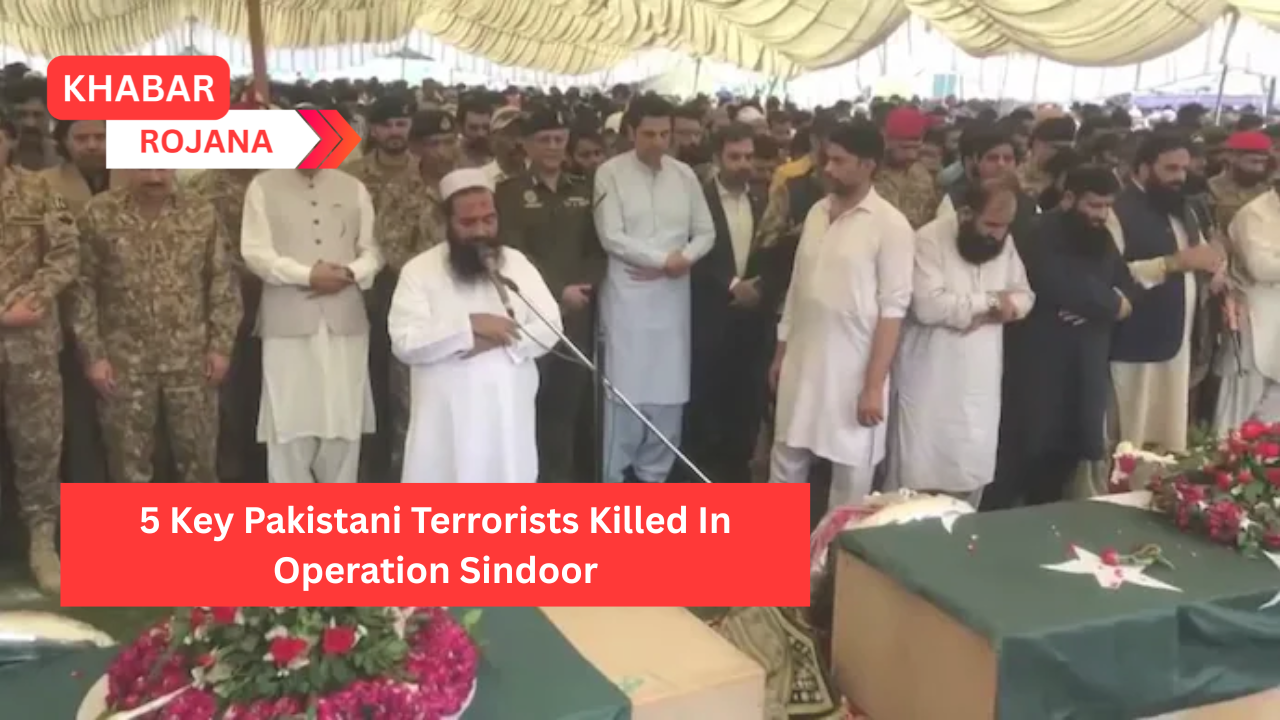
On May 7, 2025, India launched “Operation Sindoor,” a series of targeted strikes against terror camps in Pakistan and Pakistan-Occupied Kashmir (PoK). This operation aimed to dismantle terrorist infrastructure linked to groups such as Jaish-e-Mohammed (JeM) and Lashkar-e-Taiba (LeT). In the initial phase, five prominent terrorists were reportedly killed.
| Name | Affiliation | Role/Location | Notable Associations |
|---|---|---|---|
| Mudassar Khadian Khas | Lashkar-e-Taiba | Head of Markaz Taiba in Muridke | Linked to 2008 Mumbai attacks |
| Hafiz Muhammed Jameel | Jaish-e-Mohammed | In charge of Markaz Subhan Allah in Bahawalpur | Brother-in-law of Maulana Masood Azhar |
| Mohammad Yusuf Azhar | Jaish-e-Mohammed | Weapons training coordinator | Involved in 1999 IC-814 hijacking |
| Khalid alias Abu Akasha | Lashkar-e-Taiba | Active in Jammu and Kashmir | Involved in multiple terror attacks |
| Mohammad Hassan Khan | Jaish-e-Mohammed | Senior operative | Specific role details not disclosed |
These individuals were deeply embedded in the operations of their respective organizations. Mudassar Khadian Khas, for instance, was associated with the Muridke camp, a known training ground for terrorists involved in significant attacks. Hafiz Muhammed Jameel’s role in recruitment and indoctrination at the Bahawalpur camp underscores the strategic importance of these facilities.
“Operation Sindoor” involved precise airstrikes targeting nine locations, including Bahawalpur and Muridke. The Indian Air Force utilized advanced weaponry, such as SCALP missiles and AASM Hammer bombs, to neutralize these threats. The operation was described as “focused, measured, and non-escalatory,” aiming to minimize collateral damage while achieving strategic objectives.
Photographs from the funerals of these terrorists revealed the presence of senior Pakistani military officials, including a serving Lieutenant General and the Inspector General of Punjab Police. These images suggest a longstanding connection between Pakistan’s military establishment and terrorist groups, raising questions about the extent of state support for such organizations.
The international community has expressed concern over the escalation. While some countries have called for restraint, others have emphasized the need to address the root causes of terrorism. The United Nations and various human rights organizations are monitoring the situation closely, urging both nations to engage in dialogue to prevent further conflict.
The elimination of these key figures is seen as a significant blow to the operational capabilities of JeM and LeT. However, experts caution that while leadership decapitation can disrupt terrorist activities, it does not necessarily dismantle the organizational structures. Continued vigilance and counterterrorism efforts will be essential to prevent the resurgence of such groups.
India’s approach combines military action with intelligence gathering and diplomatic pressure. The success of “Operation Sindoor” demonstrates the effectiveness of targeted strikes against terrorist infrastructure. Moving forward, India is likely to continue this strategy, focusing on disrupting terrorist networks while seeking international support for its counterterrorism initiatives.
While the operation achieved its immediate objectives, there are potential long-term consequences. Retaliatory actions by Pakistan-based groups could lead to further violence. Additionally, the escalation may strain bilateral relations and complicate peace efforts in the region. Both nations will need to navigate these challenges carefully to avoid a broader conflict.
Despite the current tensions, avenues for de-escalation remain. Engaging in diplomatic dialogue, confidence-building measures, and collaborative counterterrorism initiatives can help reduce hostilities. The international community plays a crucial role in facilitating these discussions and ensuring that both India and Pakistan adhere to international norms and agreements.
The deaths of these five key Pakistani terrorists in “Operation Sindoor” mark a significant development in the ongoing counterterrorism efforts in the region. While the operation has disrupted terrorist activities, it also underscores the complex and persistent nature of the threat posed by such groups. Continued cooperation, both domestically and internationally, will be vital in achieving lasting peace and security.
 Shalu Shalu