
 By Khabar Rojana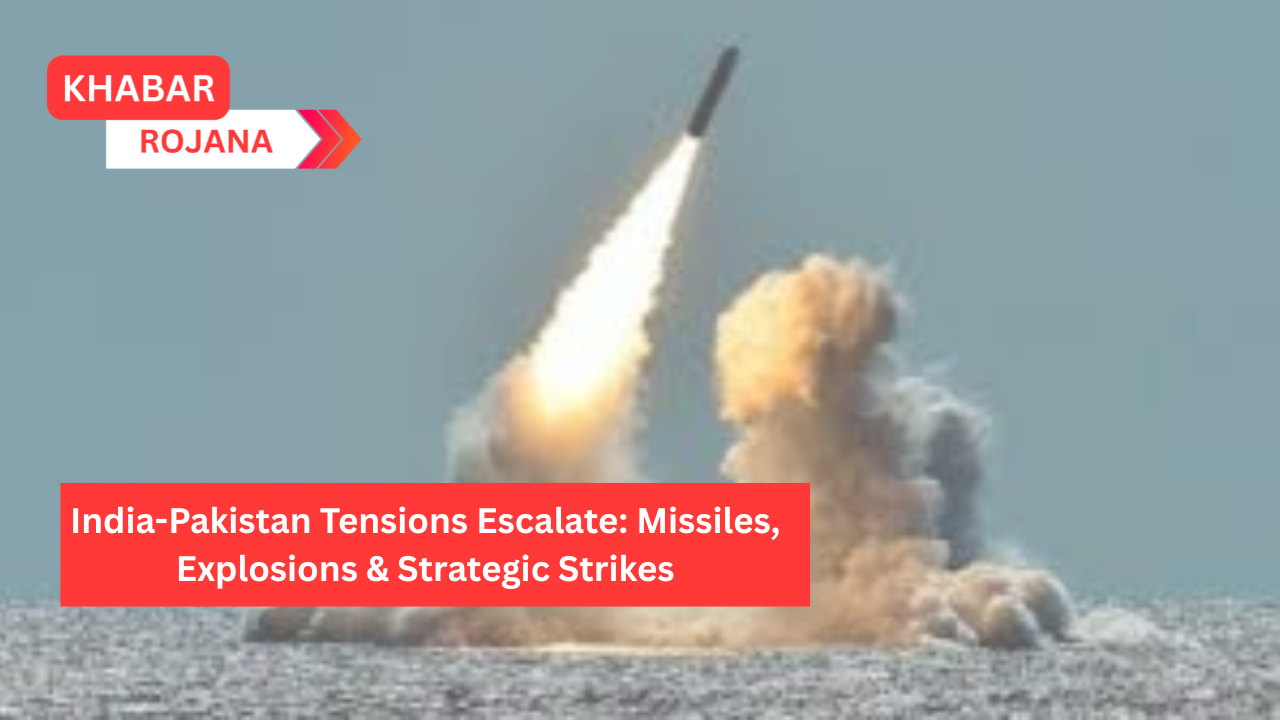
In the wake of intensified India-Pakistan tensions, both nations have engaged in a series of military actions, including missile strikes, drone attacks, and aerial operations, leading to significant casualties and widespread concern.
On May 7, 2025, India launched a series of 14 missile strikes, codenamed Operation Sindoor, targeting nine locations in Pakistani-administered Kashmir and Pakistan’s Punjab province. The strikes aimed at terrorist infrastructure, including camps of Jaish-e-Mohammed and Lashkar-e-Taiba, were reportedly conducted without entering Pakistani airspace. Pakistan responded with retaliatory missile attacks on Indian airbases, including Jammu and Udhampur, leading to explosions and casualties.
Both nations activated their air defense systems to intercept incoming missiles. India’s S-400 missile defense system successfully intercepted eight Pakistani missiles targeting Jammu, preventing potential damage. In response, Pakistan claimed to have downed 25 Israeli-made Harop loitering munitions launched by India, highlighting the ongoing aerial confrontations.
The ongoing conflict has resulted in civilian casualties on both sides. Pakistan reported 31 deaths, including 26 from Indian missile strikes and 5 from artillery shelling. India reported 15 civilian deaths, including 4 children, due to Pakistani artillery fire. Additionally, infrastructure damage has been reported, with explosions heard in Jammu and Jaisalmer, affecting civilian areas.
Drone attacks have become a significant aspect of the conflict. Pakistan initiated drone strikes on Indian airbases, including Jammu, Pathankot, and Udhampur, leading to explosions and heightened security measures. In retaliation, India claimed to have neutralized multiple Pakistani drones over Amritsar, showcasing the increasing role of unmanned aerial vehicles in modern warfare.
Key military installations have been focal points of the conflict. Pakistan’s airbases, including Nur Khan, Murid, and Shorkot, were targeted by Indian missile strikes. In response, Pakistan launched attacks on Indian airbases in Jammu, Pathankot, and Udhampur. These strategic locations have witnessed intense military activity, with both sides aiming to weaken each other’s defense capabilities.
The international community has expressed grave concern over the escalating conflict. The United States, Group of Seven (G7) nations, China, and Iran have urged both India and Pakistan to de-escalate tensions and engage in dialogue. U.S. Secretary of State Marco Rubio proposed American support in facilitating negotiations to prevent further destabilization in the region.
| Action Type | India | Pakistan |
|---|---|---|
| Missile Strikes | Targeted terrorist camps in Pakistan-administered Kashmir and Punjab | Retaliatory strikes on Indian airbases |
| Drone Interceptions | Neutralized multiple Pakistani drones over Amritsar | Claimed to have downed 25 Indian drones |
| Civilian Casualties | 15 deaths, including 4 children | 31 deaths, including 26 from Indian missile strikes |
| Infrastructure Damage | Explosions in Jammu and Jaisalmer | Explosions in Jammu and Udhampur |
India’s Operation Sindoor involved precise missile strikes using Rafale aircraft equipped with SCALP missiles and AASM Hammer bombs. The operation aimed at neutralizing terrorist infrastructure without targeting Pakistani military facilities. Pakistan’s retaliatory operation, Bunyan-un-Marsoos, focused on Indian airbases, leading to significant exchanges of fire and heightened military alertness on both sides.
Despite calls for de-escalation, both nations remain entrenched in their positions. Pakistan’s Foreign Minister Ishaq Dar stated that Pakistan may consider de-escalation if India halts attacks, emphasizing that recent strikes were a response to Indian aggression. India maintains that its actions are in retaliation to provocations and has urged Pakistan to cease hostilities.
The India-Pakistan tensions have reached a critical juncture, with both nations engaging in military actions that have resulted in civilian casualties and infrastructure damage. While international calls for de-escalation continue, the path to peace remains uncertain, with both sides asserting their positions and preparing for potential further confrontations.
 Shalu Shalu